Since the end of the Cold War, sanctions have spread as a routine tool of foreign policy. The United Nations Security Council, the European Union, and the United States have all expanded their use of targeted and sectoral measures. The collapse of the Soviet Union ended the superpower deadlock at the Security Council and opened space for new consensus on coercive economic tools. Over time, sanctions were reframed from wartime instruments into peacetime policy levers. Policymakers, legal scholars, and officials argued for sanctions as a lawful way to pressure states that resist U.S. and European policy preferences.
The International People’s Tribunal on U.S. Imperialism: Sanctions, Blockades, and Economic Coercive Measures approaches economic coercive measures as inherently violent, designed to maintain economic inequality, continue the extraction of wealth from the Global South, and preserve racial hierarchy in the international system. Such measures are structurally incapable of reform, and cannot incorporate humanitarian concerns in a fair way. The Tribunal is a collective effort to build systems of accountability rooted in global cross-movement solidarity, both within and outside of the law, to challenge the violence of imperialism through sanctions. We examine sanctions not from the perspective of those who enforce them, but from the perspective of those most harmed by them, including peoples across Asia, Africa, and Latin America.
WHY HOLD A PEOPLE’S TRIBUNAL?
People’s Tribunals capture the ethos of self-determination and internationalism that was expressed through twentieth century anti-colonial struggles and was institutionalized in the 1966 Tricontinental Conference in Cuba. They bring together movement lawyers, scholars, and organizers from around the world and are designed by and accountable to the social movements and communities in which they are rooted. Operating outside of the logics and institutions of capitalist and imperialist law, People’s Tribunals make decisions that may not be binding and do not have the force of law, but their achievements in a political and discursive register inspire and provide the tools necessary for present and future organizing. People’s Tribunals allow the oppressed to judge the powerful, defining the content as well as the scope of the procedures, which reverses the norm of the powerful creating and implementing the law.
There is a long tradition of radical organizers and lawyers using the law to put capitalism and imperialism on trial. Organized by the Civil Rights Congress, and supported by the Communist Party as well as a host of Black leftist luminaries, including W. E. B. Du Bois, Claudia Jones, and Paul Robeson, We Charge Genocide: The Historic Petition to the United Nations for Relief of a Crime of the United States against the Negro People, indicted the political-economic system of capitalism and white supremacy for inflicting numerous forms of structural and physical violence on Black people in the U.S. as well as drawing parallels to U.S. imperialist violence abroad. The Russell Tribunal was set up in 1966 to judge U.S. military intervention and war crimes in Vietnam. The same format reemerged in later Russell Tribunals dealing with the U.S.-backed Brazilian and Argentinian military dictatorships (1964 and 1976, respectively), the U.S.-backed coup in Chile (1973), and the U.S.-European interventions against Iraq (1990, 2003). The 2016 International Tribunal for Democracy in Brazil critically examined the impeachment of President Dilma Rousseff and the role of the U.S. government. Organized in Brussels by both Philippine and international groups, the 2018 International People’s Tribunal on the Philippines exposed and condemned the multiple forms of state violence visited on the people of the Philippines since Rodrigo Duterte became president in 2016. Finally, the U.S. government was addressed directly through People’s Tribunals such as the 2007 International Tribunal on Katrina and Rita and the 2018 International Tribunal on U.S. Colonial Crimes Against Puerto Rico.
What you will find on this site
This homepage summarizes the Tribunal’s purpose. A short Sanctions primer explains coercive economic measures in plain language. For deeper engagement, use the navigation at the top of the page. The Hearing schedules and Videos & transcripts pages collect session information and recordings when available. The Booklet section and the tribunal booklet PDF below offer a condensed introduction to the project’s framing. The Reports & judgement area points to substantive outputs. Organizations and witnesses can review Submit evidence for current procedures. The About section explains structure, rapporteurs, and co-organizers, and Contact lists ways to reach the organizing effort. Social updates appear in the feeds further down this page.
Content here is offered for education and organizing. It does not replace legal advice in any jurisdiction.
Latest Updates
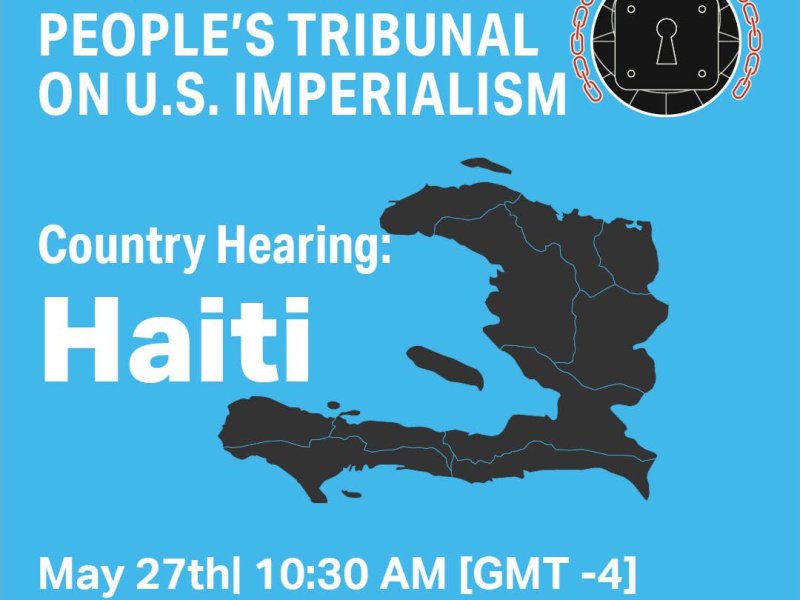
Saturday, May 27: Hearing on Haiti
Please join us this Saturday, May 27, for our hearing on Haiti. This hearing will focus on the effects of U.S. imperialism, sanctions and coercive economic measures on the people of Haiti, historically and at present. * May 27th at 10:30am EDT [GMT -4] Join us as we discuss the effects of…
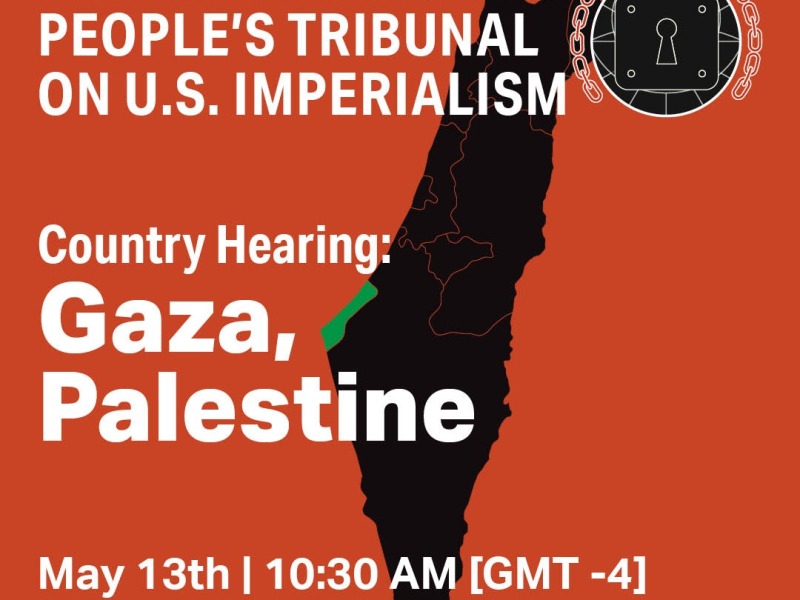
Saturday, May 13: Hearing on Gaza/Palestine
Join the International People’s Tribunal on U.S. Imperialism this Saturday, May 13, for our hearing on Gaza/Palestine! This hearing is taking place at a particularly important moment, as Gaza is under the bombs of the occupation and as the resistance struggles for freedom, as well as falling on the occasion of…
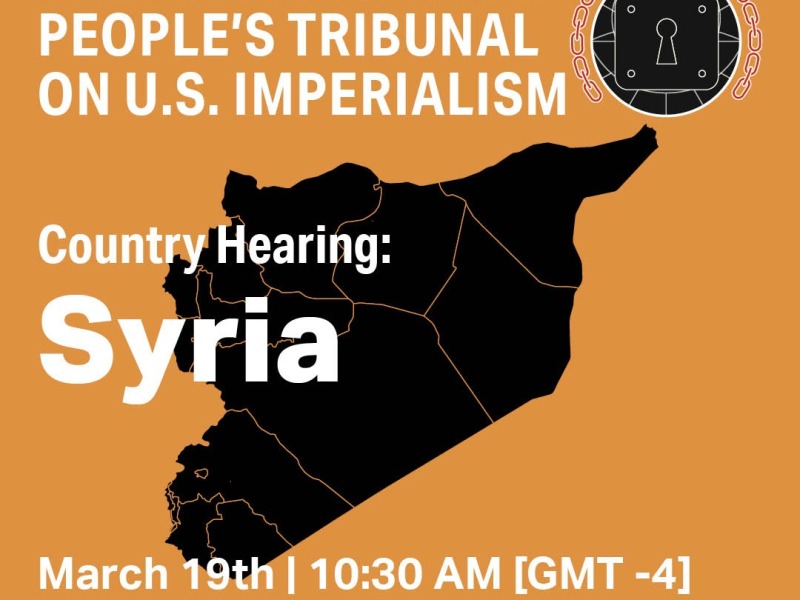
Sunday, March 19 : Hearing on Syria
Join the International People’s Tribunal on US Imperialism: Sanctions, Blockades, Coercive Economic Measures for a hearing on Sunday, March 19, on the effects and impacts of these policies and practices on the people of Syria. We will hear testimony and reports from expert and direct witnesses, with questions and…
DONATE
All donations will go directly to the efforts of the investigation.
JOIN OUR MAILING LIST
Sign up to receive updates about the Tribunal.
ENDORSE
Would your organization like to endorse the Tribunal?
No part of the materials, documents, and testimonies produced during the International People’s Tribunal on US Imperialism: Sanctions, Embargoes, and Economic Coercive Measures may be reproduced, distributed, transmitted, displayed, or otherwise used, in whole or in part, without the prior written permission of the International People’s Tribunal on US Imperialism.
Copyright © 2023–2026
International People’s Tribunal on US Imperialism: Sanctions, Embargoes, and Economic Coercive Measures. All rights reserved
 The International People's Tribunal on U.S. Imperialism